
Why Everyone Is Talking About Social Trading
Social trading turned a solitary activity into a spectator sport with a leaderboard. Instead of building a strategy from scratch, you watch what experienced traders do, see their results, and decide whether to mirror their moves with your own capital. It sounds simple because it is. The complications show up later, mostly around who holds your money and whether the track record you're looking at is real.
The demand is not small. eToro, one of the earliest platforms to popularize the model, reported more than 30 million registered users across its network as of 2023. That's a lot of people who decided they'd rather follow someone with a visible track record than guess alone.
The Rise of Following Top Traders Online
A decade ago, following a trader meant subscribing to a paid newsletter and hoping the picks arrived before the move already happened. Now you can watch positions open and close in something close to real time, sort traders by performance, and allocate to the ones you trust. The friction collapsed. So did the excuses for not doing basic due diligence, though plenty of people still skip it.
Crypto accelerated all of this. Markets run 24/7, positions move fast, and a generation of traders grew up sharing their PnL screenshots publicly. The idea of following top traders stopped being niche and became a default entry point for people who wanted exposure without spending years learning to read a chart.
What This Guide Will Cover
We'll define social trading in plain terms, walk through how it actually works, and separate it from copy trading (they overlap, but they're not identical). Then the honest part: the pros, the risks, and the one structural problem most platforms share. Custody. By the end you'll understand why on-chain, non-custodial vaults offer a different answer to the same question everyone's asking.
What Is Social Trading? Meaning and Definition
Social trading is the practice of making investment decisions based on the visible activity of other traders. You observe their positions, performance, and strategies through a shared platform, then choose how much (if anything) to allocate alongside them. The "social" part is the transparency layer: you're not trading in isolation, you're trading with information about what others are doing.
Social Trading Meaning in Plain English
Think of it as an open-book exam where the top students post their answers before you commit. The social trading meaning boils down to this: instead of relying only on your own analysis, you use the collective activity and track records of a community of traders as an input. Some people use it to learn. Others use it to allocate. Most do a bit of both.
The key word is decision. Social trading gives you information and social proof. Whether you act on it, and how much, stays with you.
How Social Trading Differs From Traditional Investing
Traditional investing hides the manager. You buy into a fund, get a quarterly report, and trust that the strategy on the fact sheet matches what's happening inside. Social trading flips that. The trader's activity is the product, and it's visible more or less continuously.
That visibility changes the relationship. In a mutual fund you're a passenger who checks the mileage once a quarter. In social trading you can see the steering wheel move.
Why Social Trading Grew Popular in Crypto
Crypto was practically built for this. Wallets are pseudonymous but public, blockchains record every transaction permanently, and the culture rewards traders who show their work. When a trader can point to an on-chain address and say "here's every fill I've ever made," social trading stops depending on trust and starts depending on data.
There's also the pace. A trader running a JUP-USDC momentum strategy might turn over their book several times a week. Following that in a legacy system with T+2 settlement would be absurd. On Solana, settlement lands in sub-seconds, so following someone actually keeps up with what they're doing.
How Social Trading Works
At its core, three things happen: traders publish their activity, a platform aggregates and ranks it, and followers allocate based on what they see. The mechanics differ across platforms, but that loop is constant.
Finding and Evaluating Top Traders
Most people pick a trader by sorting the leaderboard by highest return and following the top row. That's how you find the account that got lucky on one leveraged SOL trade last week and is about to give it all back. A single hot month tells you almost nothing.
Look at these instead:
- Max drawdown. The deepest peak-to-trough loss the trader has taken. A 300% return with an 80% drawdown means they nearly blew up on the way. Some followers can't stomach that, and they shouldn't pretend they can.
- Time in market. A track record spanning three months across one bull run is not a track record. You want performance across chop, trends, and at least one nasty drawdown to see how they behave when things go wrong.
- Consistency over hero trades. A trader who grinds steady gains often survives longer than one who swings for the fences and occasionally connects.
None of these guarantee future results. They just filter out the accounts that got lucky once.
Sharing Trades, Signals, and Strategies
Platforms handle sharing differently. Some broadcast signals (a trader posts "long SOL at 142," and you decide whether to act). Others show full position histories after the fact. The most integrated setups execute the trader's moves and reflect them proportionally across everyone following, no manual step required.
The signal model keeps you in control but demands attention: miss the alert, miss the trade. The automated model removes the lag but also removes your veto on any individual position. Neither is strictly better. It depends on how hands-on you want to be.
The Role of Transparency and Track Records
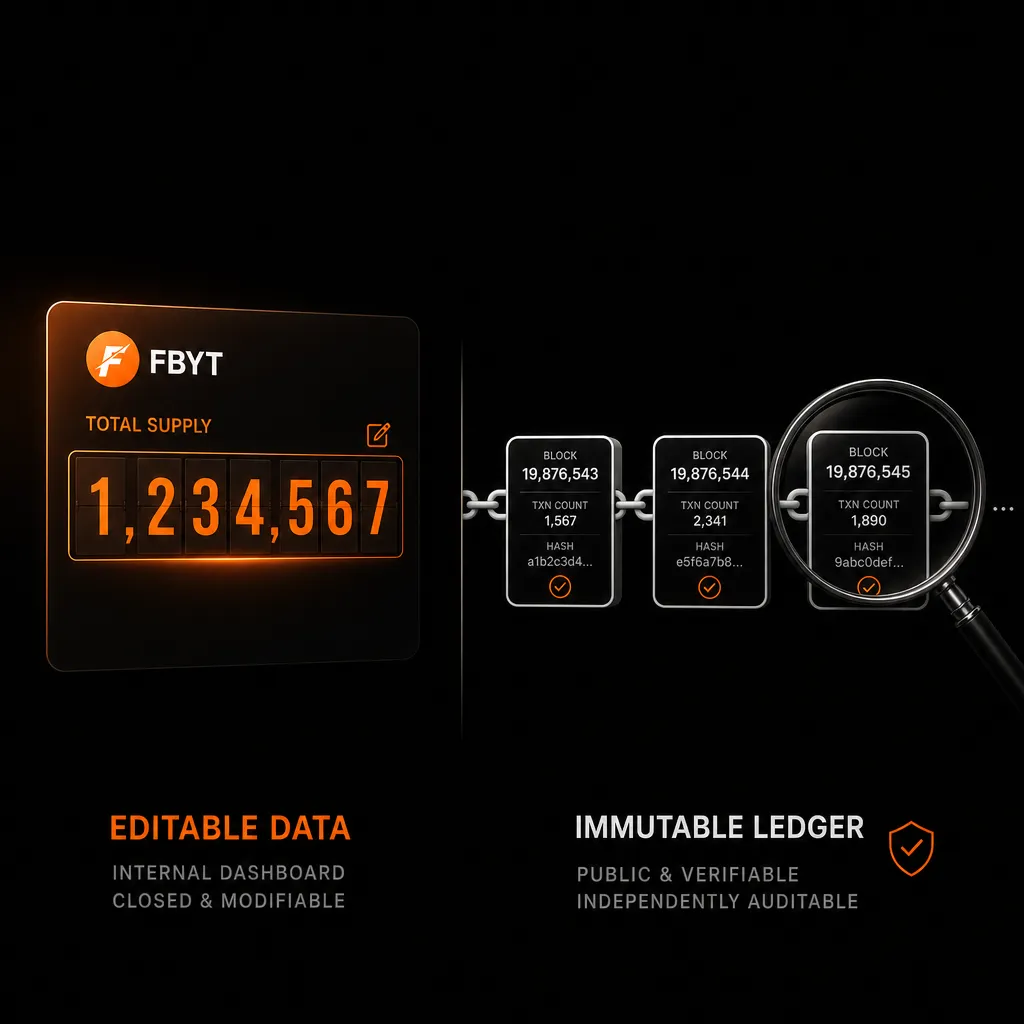
Here's where most platforms quietly fail. A leaderboard showing a trader up 240% is only as trustworthy as the data behind it. If the platform controls that data, it can be delayed, filtered, or cherry-picked, and you'd never know.
On-chain track records solve this differently. When every fill settles on a public blockchain, the record is immutable and independently verifiable. You don't trust the platform's dashboard. You trust the ledger, and you can check it yourself on a Solana explorer if you're inclined.
Copy Trading vs Social Trading: What's the Difference?
People use these terms interchangeably, and they shouldn't. Social trading is the broad category: observing and interacting with other traders' activity. Copy trading is a specific mechanism inside it: automatically replicating another trader's positions in your own account.
What Is Copy Trading?
How copy trading works automates the "follow" action. You allocate a set amount to a trader, and the platform mirrors their trades proportionally. They open a position, you open the same one scaled to your capital. They close it, you close it. No signals to catch, no manual clicks.
The convenience is real. So is the loss of discretion: you inherit every decision, including the bad ones, in real time.
Copy Trading vs Social Trading Compared
The cleanest way to hold the copy trading vs social trading distinction in your head: social trading is the ecosystem, copy trading is one feature within it. You can do social trading without copying (watching, learning, taking signals selectively) but you can't really do copy trading without the underlying social layer that surfaces who's worth copying.
Copy trading is more passive. Social trading, in its fuller form, can be as active as you want it to be. One removes friction. The other preserves control. Where you land depends on how much you trust your own judgment against the trader's.
Which Approach Suits Different Investors
Someone who works a full-time job and can't monitor markets during the Asia session might prefer full automation. A trader who wants to learn a strategy before committing capital might follow signals manually and paper-trade them first. A DAO allocating treasury reserves probably wants transparency and verifiability above convenience, because it answers to token holders.
The Pros and Risks of Social Trading
Potential Benefits of Following Top Traders
The obvious upside is access. You get exposure to strategies you couldn't build or execute yourself, without spending years learning to trade perps or manage risk across a volatile book. There's a learning dimension too: watching a skilled trader size positions and cut losers teaches more than most courses.
It also saves time. Following a vetted trader means you're not glued to a chart at 3 a.m. hoping to catch a breakout.
Key Risks and Why Past Performance Isn't a Guarantee
A follower allocated 2,000 USDC to a trader up 180% over six months. Month seven, the market regime flipped from trending to choppy, the trader's momentum strategy started bleeding on every whipsaw, and the follower was down 35% before deciding to unfollow. The trader wasn't a fraud. Their edge just stopped working, which is what edges do.
That's the core risk. Past performance describes a market that no longer exists. Add survivorship bias (leaderboards show the winners; the accounts that blew up quietly disappear) and you get a distorted picture of how likely success actually is. Strategies also decay as more capital piles into them, thinning the edge.
How to Manage Risk When Following Traders
Don't allocate everything to one trader, no matter how clean their record looks. Concentration is how a single strategy failure becomes your entire loss. Spread across a few uncorrelated approaches and size each so that a total loss on any one wouldn't wreck you.
And check the drawdown before the return. Every trader, every time. If you can't stomach the historical drawdown, the return is irrelevant because you'll bail at the worst moment.
The Custody Problem With Most Social Trading Platforms
What 'Giving Up Custody' Really Means
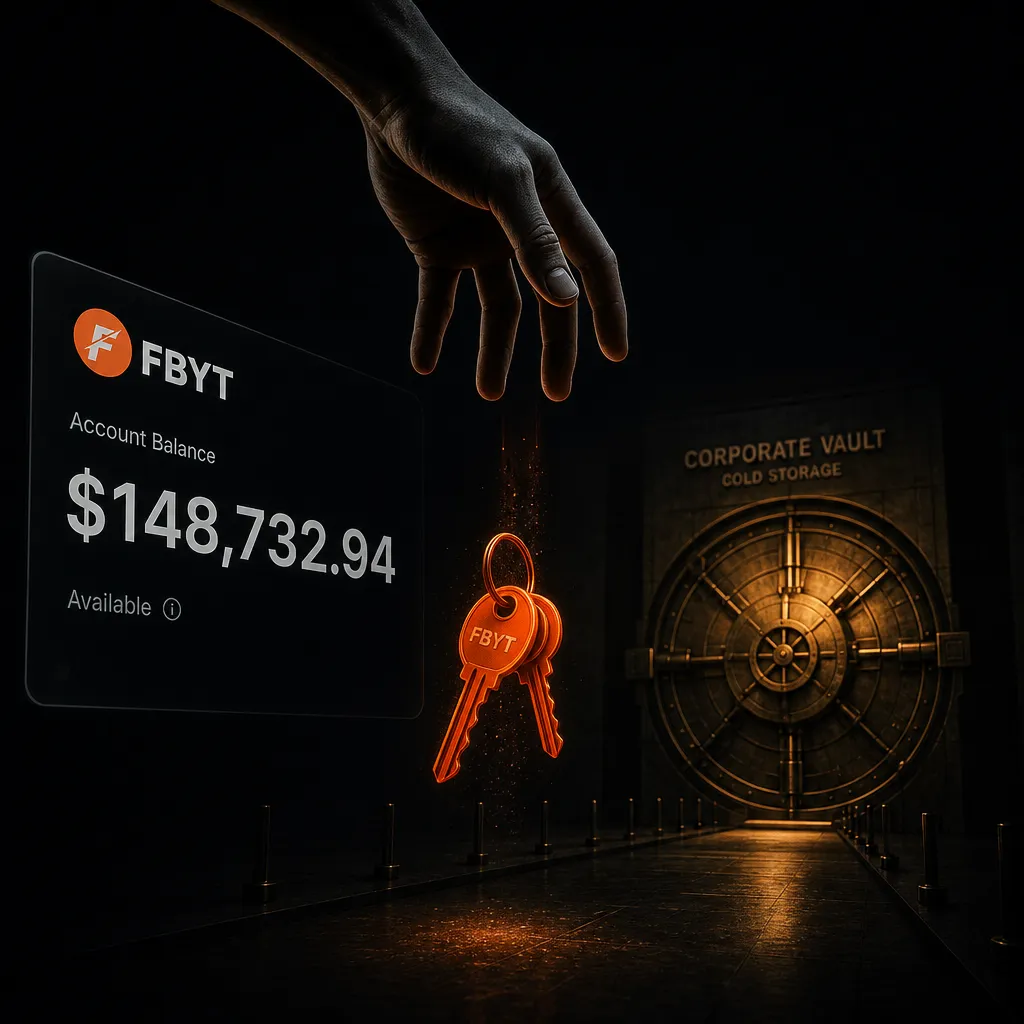
On most social trading platforms, you deposit funds into the platform's account before you can follow anyone. At that moment, the platform holds your money. You have a balance on a screen; they have the actual assets. If they freeze withdrawals, get hacked, or go insolvent, your screen balance and your recoverable funds become two very different numbers.
Giving up custody means trusting an intermediary to keep and return your capital on demand. That trust is exactly what a lot of crypto was designed to remove.
Counterparty and Platform Risks to Watch For
A centralized platform holding 400 million in customer deposits is a single point of failure and a single target. We watched this play out repeatedly in 2022, when several custodial trading and lending platforms halted withdrawals and users learned their "balance" was an IOU. The FTX collapse alone left creditors owing an estimated 8 billion, per bankruptcy filings.
Counterparty risk isn't theoretical. It's the recurring theme in every major crypto blowup where users didn't hold their own keys.
The Non-Custodial Alternative: On-Chain Vaults
How Non-Custodial Vaults Let You Follow Top Traders
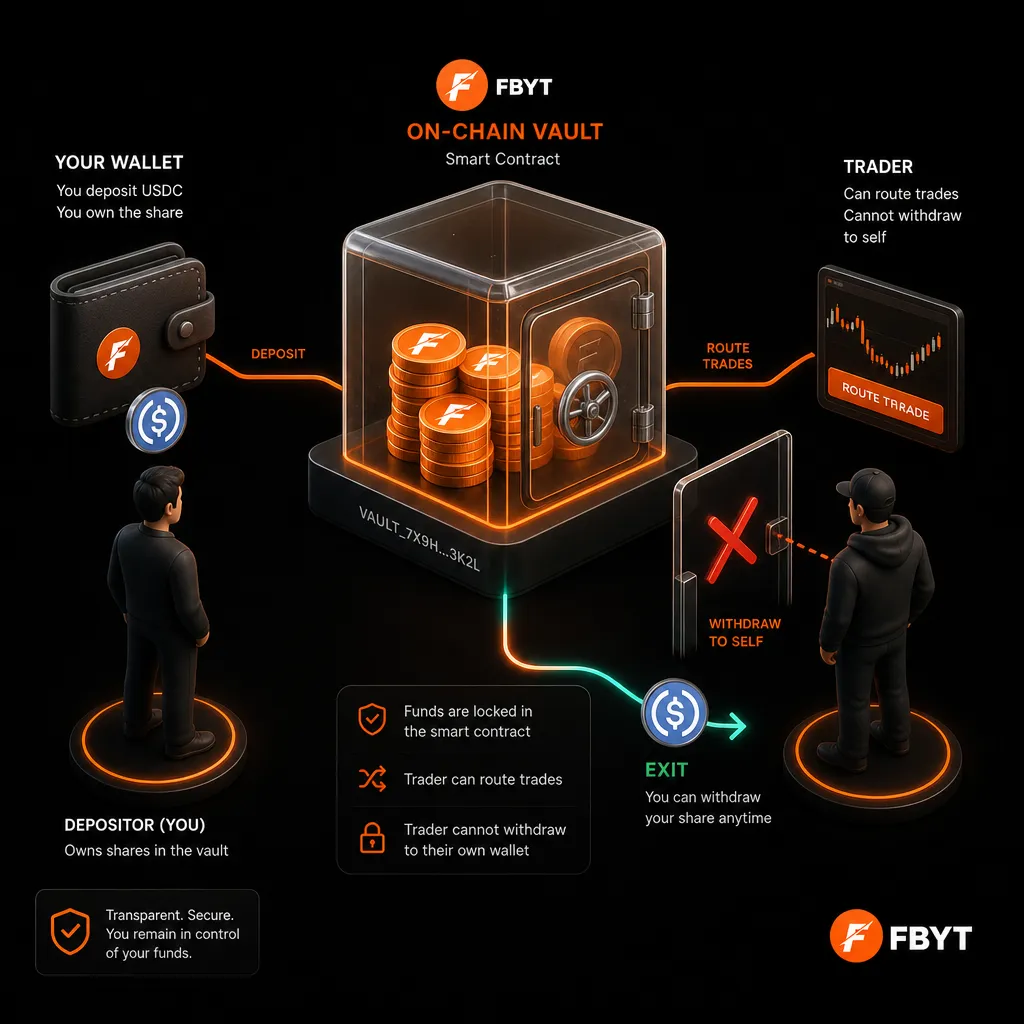
A non-custodial vault flips the custody model. You deposit directly from your own wallet into an on-chain vault, and the funds stay in a smart contract you can audit, not in a company's bank account. The trader running the vault can execute strategies with the pooled capital but cannot withdraw it to themselves. You can pull your share out whenever you want.
You still follow a top trader. By following traders non-custodially, you just don't hand them, or the platform, the keys to your money.
Transparency, Instant Settlement, and No Lock-Ups
Because everything happens on-chain, every fill the vault manager makes is recorded on Solana and publicly verifiable. The track record isn't a marketing dashboard; it's the ledger. Settlement lands in sub-seconds, fees are negligible compared to legacy venues, and there are no lock-ups, so you're never stuck watching a drawdown you can't exit.
This doesn't erase risk. Smart contracts can contain bugs, and audited does not mean unbreakable; a nine-month-old audit won't catch a vulnerability introduced last week. The strategy inside the vault can still lose money. What changes is that nobody can freeze your withdrawal or run off with the pool.
How FBYT Approaches Social Trading on Solana
FBYT (firstbyt) is a non-custodial capital management protocol built on Solana and the Jupiter ecosystem. Qualified traders publish public vaults, investors deposit straight from their own wallets, and funds never leave self-custody. Every trade settles on-chain, so the performance history is immutable and anyone can verify it independently rather than trusting a number on a screen.
That's social trading with the counterparty risk removed from the equation. You follow top Solana managers by allocating to their vaults, you see exactly what they've done because it's on the chain, and you withdraw on your own schedule. FBYT cannot access, lock, or move your funds. The permissionless vault model means any trader with a genuine track record can publish a strategy without going through a custodian.
Getting Started With Social Trading the Safer Way
Start by deciding how much control you want. If you want to learn, follow a few traders' activity and study how they size and exit positions before committing real capital. If you want allocation without the day-to-day, look at copy trading apps and platforms where the track record is verifiable rather than self-reported, and where you keep custody of your funds.
Whatever route you take, do the boring work first. Check the max drawdown, confirm the track record spans more than one market regime, and never put more into a single trader or vault than you'd accept losing entirely. Social trading gives you access to expertise you don't have. It doesn't give you a guarantee, and anyone selling it as one is the person to walk away from.
Crypto assets are highly volatile and on-chain strategies carry real risk, including the total loss of your capital. Past vault performance tells you nothing certain about future results. FBYT is non-custodial and does not provide financial advice. Only deposit funds you can afford to lose, and review the smart contract, vault terms, and the underlying strategy before you allocate anything.


